Salmon pink color comes from what the fish eats. Wild salmon eat krill, shrimp-like zooplankton and other small crustaceans that carry a natural red pigment called astaxanthin, and that pigment builds up in the muscle. Sockeye eat more of those crustaceans than any other salmon, which is why wild sockeye is the deepest red fish in the case.
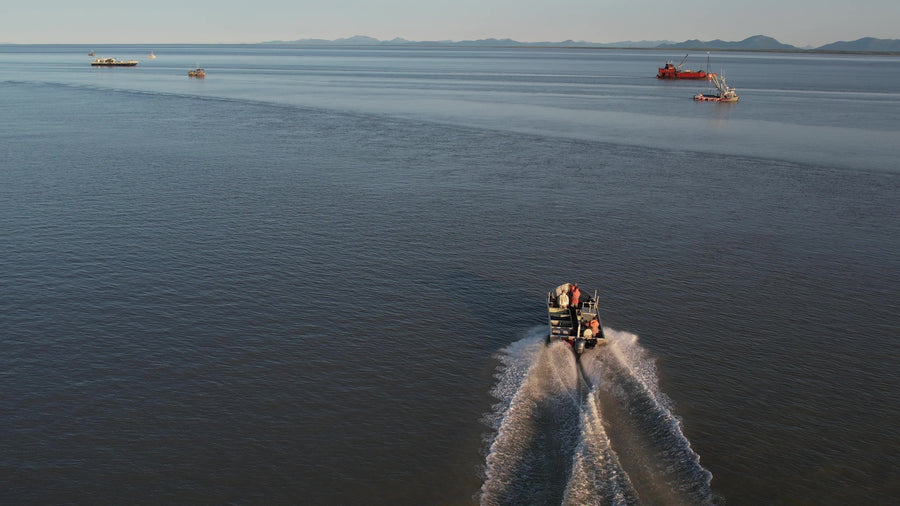
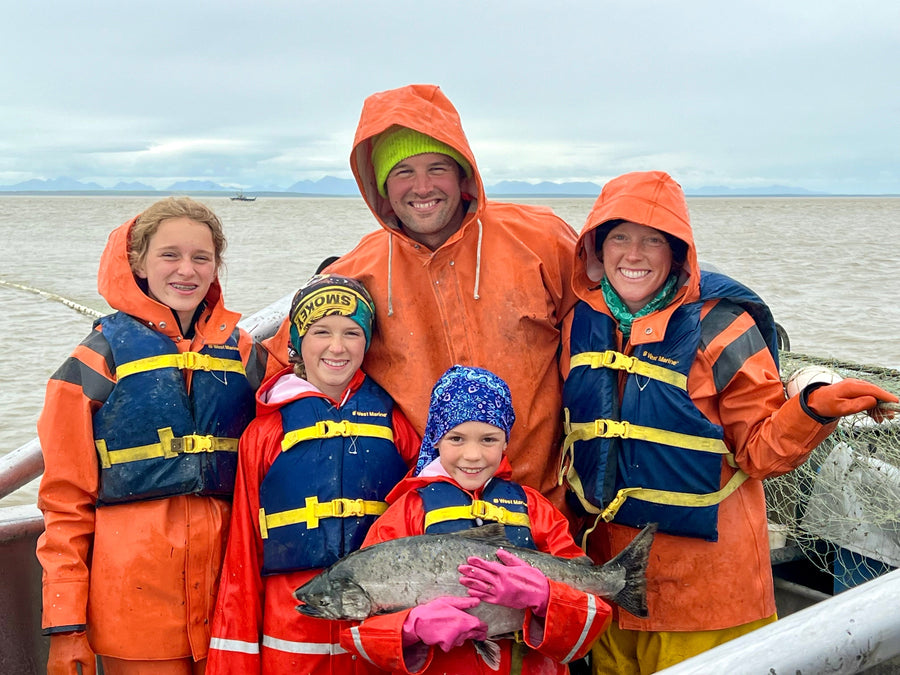
I'm Captain Luke. My family and I setnet for sockeye on the Nushagak in Bristol Bay, and the color question comes up more than almost any other. People see a sockeye fillet next to a pale farmed fillet and want to know if something was added. On our fish, nothing was. On farmed fish, the answer is more complicated, and I'll be straight with you about it below.
Here's the thing that surprises people most: when we pull sockeye out of the net, they aren't red on the outside at all. They're silver. I wrote about it on our Facebook page this fall: "Every silver flash along that net is a salmon." The red is on the inside, and it's been building the whole time that fish was out in the ocean.

Why is salmon pink or red?
Salmon flesh isn't naturally white like cod. Its color is diet, plain and simple.
- The pigment: astaxanthin, a carotenoid. It's in the same family of compounds that makes carrots orange and flamingos pink.
- Where it starts: tiny algae make it. Krill and other small crustaceans eat the algae, and salmon eat the crustaceans.
- Where it ends up: salmon store astaxanthin in their muscle. The more crustaceans in the diet, the deeper the salmon pink color.
A cooked shrimp or a lobster shell turns red for the same reason. It's the same pigment.
Why is sockeye salmon so red compared to other salmon?
NOAA Fisheries describes sockeye as feeding mainly on zooplankton out in the North Pacific, and that diet is the whole story. Sockeye spend two or three years out there eating small crustaceans, and they come home with more pigment in the meat than the other species.
| Wild salmon | Typical flesh color | Why |
|---|---|---|
| Sockeye (red salmon) | Deep red-orange | Diet heavy in zooplankton and small crustaceans |
| Coho (silver salmon) | Orange-red, a shade lighter | Eats more small fish as it grows |
| King (Chinook) | Orange, sometimes white | Mixed diet; some kings can't store the pigment (see below) |
| Pink salmon (humpy) | Light pink | Short life, small fish, less time to build color |
| Farmed Atlantic | Pink-orange, set by the farmer | Astaxanthin added to the feed |
That's also why sockeye has the nickname it does. Fishermen have called it "red gold" for a long time. I said it on our page last fall: "Us fishers have to stake our spot just like the gold miners. But we harvest red gold."
If you're picking between species, our sockeye vs Atlantic salmon guide goes through taste, texture and nutrition side by side.
Pink vs red salmon: is pink salmon the same as sockeye?
No, and the names cause a lot of confusion. "Red salmon" is the old common name for sockeye. "Pink salmon" is a different species altogether, the smallest Pacific salmon, often sold canned. So "pink vs red salmon" is really pink salmon vs sockeye.
- Sockeye (red): firmer, richer, deep red, stronger salmon flavor
- Pink: softer, milder, pale, usually smaller fillets
Both are wild Pacific salmon. They just aren't the same fish, and the color tells you right away which one you've got.
Do salmon turn red when they spawn?
Yes, but that's the skin, and it happens after we fish them. According to NOAA Fisheries, sockeye heading upriver to spawn turn bright red on the body with a green head. As they do, the fish pull pigment and energy out of the muscle and put it into their skin and eggs. The meat gets paler and softer the farther upriver they go.
That's one reason where you catch a sockeye matters. Our nets are at the mouth of the Nushagak, where the fish are still bright silver, full of fat and full of color, right as they come in from the ocean. Fish and Game only opens the fishery once enough fish are making it upriver to spawn, so the ones that go past us carry on and make the next run.

Is farmed salmon dyed?
This is the part where I want to be fair. Farmed salmon would be grey or off-white without help, because pellets don't contain the crustaceans a wild fish eats. So farms add astaxanthin to the feed. The FDA lists astaxanthin as an approved color additive for salmon feed (21 CFR 73.35), and farmed salmon sold in the U.S. that was fed it has to say "color added" on the label.
Here's the honest bit. It isn't paint, and it isn't sprayed on. The fish eats it and stores it in the muscle the same way a wild fish does, and the synthetic version is the same molecule as the natural one. So color alone doesn't prove a fish is wild. A farmer can pick a shade from a color fan and feed to it.
What color can tell you is what kind of life the fish had. A wild sockeye earned its red over years of eating its natural diet in the open ocean. Our fish are 100% wild-caught, with no antibiotics, additives or preservatives. For the full side-by-side, read wild salmon vs farmed salmon.
Why is some king salmon white?
Every so often we see a king with white or marbled meat. The Alaska Department of Fish and Game explains it as genetics: some kings can't break down and store the pigment from their diet, so it never makes it into the muscle. They eat the same food. They just don't keep the color. White kings are perfectly good eating, and some cooks seek them out.
What color should cooked salmon be?
- Raw sockeye: deep red-orange, glossy
- Cooked sockeye: lighter pink-orange and opaque, flaking with a fork
- Done temperature: 145°F in the thickest part is the USDA safe minimum for fish
Sockeye is lean compared to farmed salmon, so it goes from perfect to dry quickly. My advice from our Facebook page still stands: "if you are careful not to over cook it, tastes much better." Pull it a minute early and let it rest.
Frozen-at-peak sockeye holds its color well. If a thawed fillet looks dull brown or has dry, white patches, that's usually freezer burn from a torn bag, not the fish. We freeze at peak freshness and control the cold chain to your door so you don't see that.

Salmon pink color: frequently asked questions
Why is wild salmon pink?
Wild salmon eat krill and other small crustaceans that contain astaxanthin, a natural red-orange pigment. It builds up in the muscle over the fish's life at sea.
Is the red color in sockeye natural?
Yes. Wild sockeye get their color only from their diet. Nothing is added to the fish we catch.
Why is my farmed salmon so much lighter or more orange?
Farmed salmon color comes from astaxanthin mixed into the feed, and the farm chooses how much. Check the label for "color added."
Does a deeper salmon color mean better quality?
Not by itself. Deep color tells you about the species and its diet. Freshness, fat and how the fish was handled and frozen matter just as much.
Is dark salmon color a sign it's gone bad?
Deep red is normal for sockeye. Brown or grey patches, a slimy feel or a sour smell are the signs to watch for.
What's the difference between pink and red salmon?
They're different species. Red salmon is sockeye, the deepest-colored salmon. Pink salmon is a smaller, paler, milder species.
See the color for yourself
The easiest way to know what real sockeye looks like is to open a bag of it. Our Wild Alaskan Sockeye Salmon 12 Pack is all Bristol Bay sockeye, caught by our family and frozen at peak. If you'd rather start small, a one-time sample box is the low-risk way to try it, or you can build a seafood plan that fits how your family eats. Every order is backed by Capt Luke's 100% Satisfaction & Money-Back Guarantee.
From our net to your table,
Captain Luke
Bristol Bay, Alaska